Showing posts with label Travels. Show all posts

Sunday, February 7, 2016

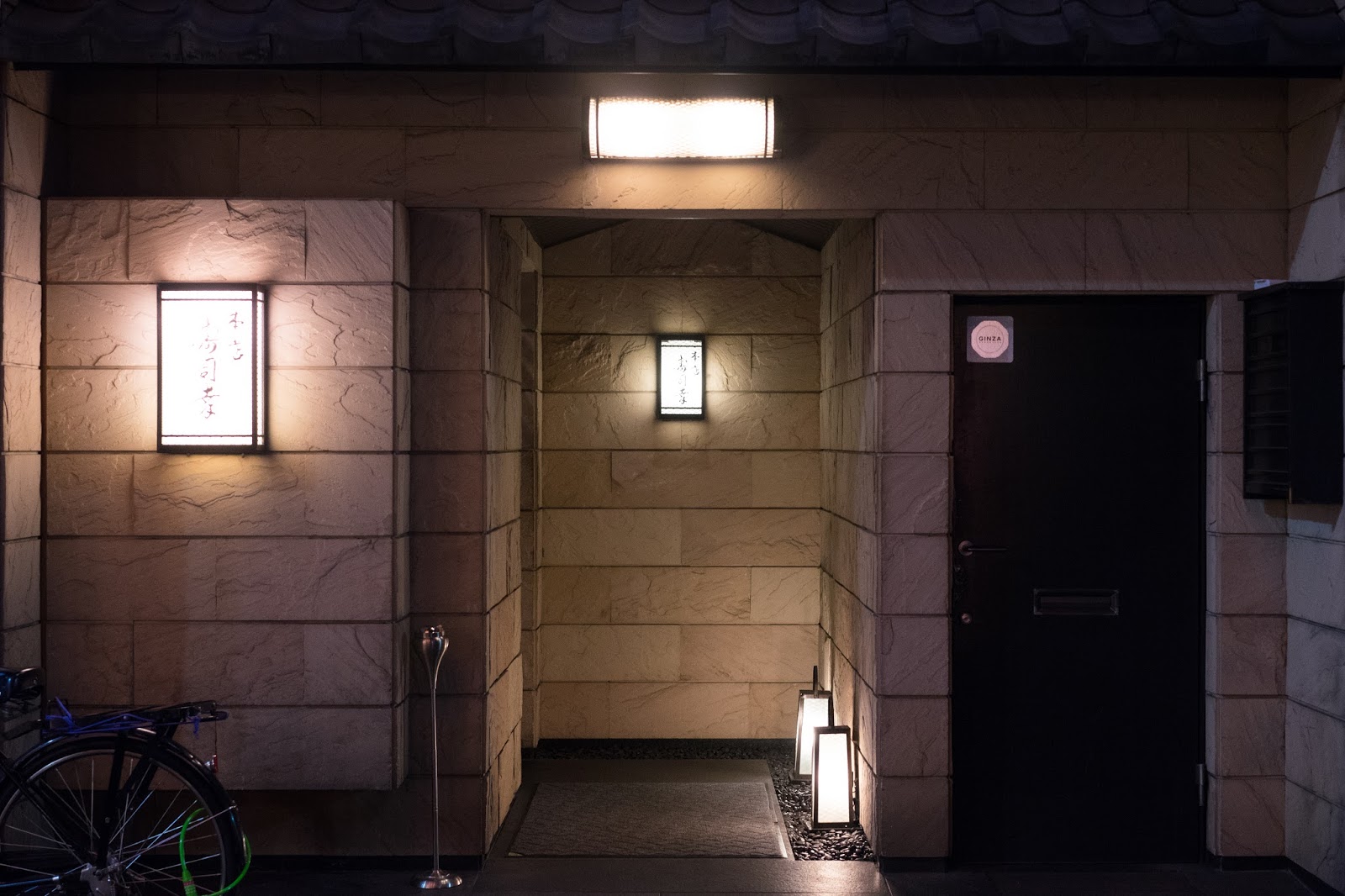
Sushiko Honten, Tokyo - K's first visit


On our recent trip to Japan, we spent 3 days in Tokyo on our way back to Sydney from Hokkaido.  C took this opportunity to book us and some friends a spot at Sushiko Honten in Ginza on New Year's Eve.  You may recall that C has already been here once and had pretty impressive things to say about it (see his last review here).  After his rave review and saying this restaurant has ruined his ability to enjoy sushi in Australia, I was pretty keen to go and check out what all the fuss was about.  After all - it's just rice and fish right?

How wrong I was!

Without sounding like a food snob, Sushiko Honten wasn't just a restaurant, but a performance; a theatric experience that is more than just eating what is placed before you. Leaving Sushiko Honten, I had a new found admiration and appreciation of the art of sushi making and Japanese cuisine.


Sushiko Honten has been open for more than 130 years. The restaurant is small and cosy. Understated and simple. Diners are seated around the sushi bar where the chefs work.  When we first entered, there was an eerie, awkward silence - as diners sat watching their designated chef work his magic, mesmerised by the skill and performance before them. The experience didn't start and end with the sushi being delivered onto your plate.  Rather, the whole meal was a performance by your designated chef - there's very little chatter between diners as everyone is focused on the mastery that is before them.


The first dish was a combination of two types of shrimp with soy and a dollop of wasabi on top.  I have honestly never had pawns as fresh as this and it left me salivating for me.  One of our friends we dined with loved this dish so much she ordered it again at the end of her meal!  I still don't know how something so seemingly simple could have such sweetness and intensity of flavour.
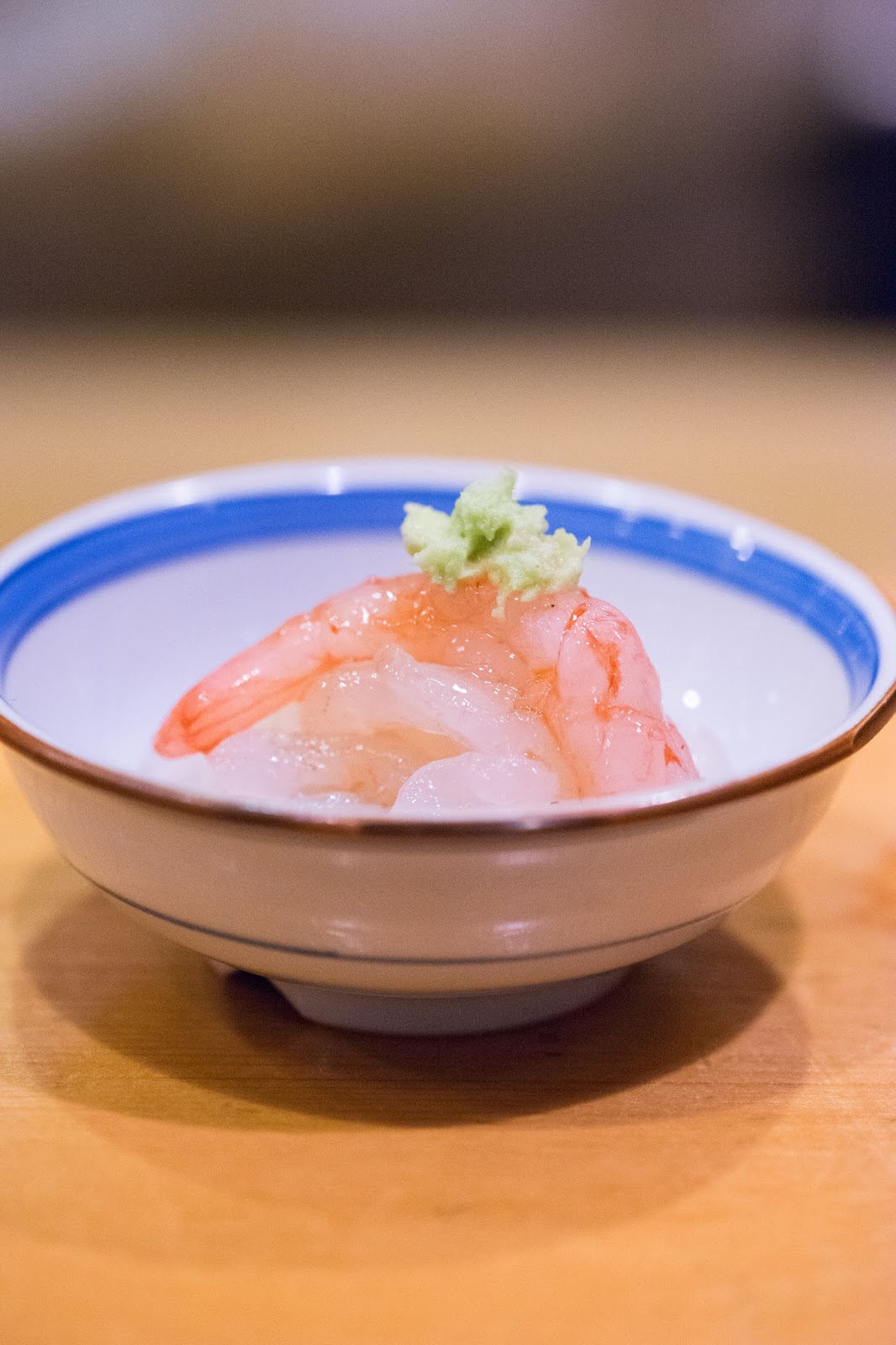
2 types of shrimp - shira ebi and amae ebi
The next dish was steamed abalone with seaweed.  The abalone flesh is tender and tastes like fresh seawater.  The seaweed helped to accentuate these flavours even more.
Abalone
Crab with egg
Next, we had a crab dish with egg (and some black pepper cracked on top).  We were told the crab was sourced from Kanazawa.  This dish was a bit of a fusion dish and very creamy.


Chu-toro sashimi
Now onto the sashimi course.  Part of what was so entertaining about Sushiko Honten (or any other Japanese restaurant specialising in sushi) is being able to watch the chef's incredible knife skills.  Watching our chef, we noticed that different types of fish and even different types of tuna are cut to different thickness. It shows such incredible understanding of their produce and how to showcase each piece of fish's flavour.

For our sashimi course, we got chu toro (medium fatty tuna) and flounder. The two pieces of fish contrasted dramatically in texture, the chu toro soft and melts in your mouth and the flounder subtle in flavour and more chewy (and hence cut to a thinner width). The contrast actually helped to emphasise the special features of the two types of fish.
Sashimi - chu toro and flounder

To be honest, I was a little surprised when I saw our next dish was grilled fish but I was not disappointed. We were given grilled swordfish and o-toro (the fattiest of fatty tuna).  The fish was not overcooked and there was a real intensity of sweetness to the swordfish. As for the o-toro - well, it was o-toro - do I need to say more? It was out of this world and just melted away in our mouths.
Grilled fish - swordfish and o-toro
We then moved onto the nigiri courses.  First we got a yellow tail sushi. To be honest, it was probably my least favourite dish as the fish lacked a bit of flavour and was a little tough. That said, it was quite an interesting fish as the more you chewed it, the more the flavours came out.

Yellow Tail
Next was the squid.  This was lightly seasoned with a few drops of lemon juice and a dash of salt. I remember seeing how our chef was absolutely precise with the number of drops of lemon he placed on each of our sushi.  Just another example of the attention to detail and perfection that goes into making each nigiri.

Flavour and texture wise, I have never had squid like this. It was a perfect balance of crunch, tenderness and chewiness. I was amazed at how much the lemon and salt helped emphasise the fresh flavours of the squid.
Squid - with lemon and salt
Next we have the horse mackerel.  I am not normally a fan of mackerel but this was very different to any mackerel I've had before. The flavour of this fish is much bolder than other fish and whilst I usually find mackerel quite heavy and fishy, this one was fresh and flavoursome and lightened up by the spring onions and radish dressing on top.
Horse mackerel
Much to all of our excitement, next up was the o-toro.  I'm not sure the photos quite capture in full just how fatty and delicious this piece of tuna was but honestly, when you bite into this piece of sushi, it simply melts away into your mouth and your taste buds are taken over by the intense fresh flavours of the tuna.  It's fish on a whole new level and I think this piece of sushi alone made me realise how much there is to sushi and what I've been missing out on all this time!

O-toro
perfectly seasoned with just the amount of soy sauce the chef wants you to enjoy the sushi with. Remember not to dunk your sushi into any more soy sauce!!
My second favourite dish of the night - bafun uni (sea urchin).  My first ever good experience of uni was at Sushi Dai (Tsukiji Fish Market) in 2011 and prior to this, I never understood why people liked sea urchin. Frankly, it always tasted a little smelly to me.  Ever since my first experience of good uni in 2011, I've barely ever eaten uni outside of Japan.  Coming to Sushiko Honten, I was really excited to try this delicacy.

And it didn't disappoint. When you eat good uni, it feels like you are tasting the sea in your mouth.  It's salty, sweet and creamy all at the same time. The chef also sprinkled a bit of salt on the top to accentuate the flavours.  This was just perfect. Even better than the uni we had in Hokkaido!
Bafun uni
As we were dining omakase, it was entirely up to the chef what he serves us.  It's often dependent on what is seasonal and we definitely found that many of our dishes were different to what C had on his first visit.  Seasonal produce aside, we suspected that our chef was mildly amused by our delightful squeals each time he served us o-toro and so decided to kindly offer us even more - but this time lightly grilled (cue: more oo-ing and ahh-ing in delight).  We were in o-toro heaven.

Next we had a kawahagi fish with liver.  It's the first time I've had fish with liver in this way and was a little hesitant but it turns out quite enjoyable.  The liver was like Foie Gras of the sea and the texture of the fish in contract with the liver also elevated the dish.


Now onto the last few dishes of the omakase.  The first being miso soup, followed by grilled shitake mushroom and anago (saltwater eel) nigiri.
Miso Soup
Shitake mushroom nigiri
The intensity of the mushroom flavour and umami on this nigiri was delicious.  The mushroom was grilled just enough to give it that dry outer layer but still retaining the mushroom juices on the inside.
Anago nigiri
Anago is saltwater eel.  I've never had it before and was surprised by its soft, melt in your mouth texture, compared to the more chewy and bolder flavoured unagi (freshwater eel) that I am use to having in Australia. The flavours were subtle and the marinade did not overpower the delicate flavours of the fish.

This was the end of our omakase.  Our chef then asked us if we were full or wanted any additional items. We agonised momentarily about whether to call it a day or indulge in another piece of that amazing o-toro nigiri again. In the end, we opted to go for our friend's motto (who also decided to have one more of the shrimp two ways that we first ate) - if you like it, you have to eat it twice! And with that, we each ordered ourselves another o-toro (whilst quietly ignoring what the monetary carnage would be at the end).

O-toro - look at that glistening fat
One thing that people may forget when scoping out restaurants in Tokyo is how hard it is to get bookings at good restaurants. Many restaurants only take bookings on certain days, force you to get hotel concierge to make the booking or even decline to take reservations from foreigners.

In comparison to many other top flight sushi restaurants, Sushiko Honten was extremely easy to make a reservation at. We didn't need to jump through elaborate hoops, we were told to book through a hotel because we were foreigners and the person taking our booking spoke some English. And it was the best meal we had in Japan.


Sushiko Honten: +81 3-3571-1968
Address: 6-3-8 Ginza, Chuo, Tokyo 104-0061, Japan

Friday, January 8, 2016

The Bow Bar, Sapporo


As a diehard whisky lover, one of the first thing C does on holidays is to map out every single whisky bar and liquor shop in the area and visit as many as he can.

Sapporo was a city of surprises, with a number of well stocked liquor shops (much better stocked than Tokyo with both Japanese whisky and interesting scotch, apart from a Yamazaki Sherry Cask spotted in Nihonbashi). It’s also home to one of the coolest whisky bars C has ever heard of.


The Bow Bar in Sapporo's bustling Susukino district is a bar that specialises in old scotch. When we say old, we don't just mean scotches that are 20, 30 or 40 years old, but Scottish whisky that was distilled in the 1950s, 1960s or 1970s, regardless of when they were bottled.

The bar is nestled in a non-descript tall building, just a few minutes’ walk from Susukino subway station, with quite small signage on street level. I recommend that you use Google maps to pinpoint the location if you want to avoid wandering around. Take the lift up and you'll see a tiled wall, wooden door and wall of empty whisky bottles and you've arrived at your destination.


Walk into the bar and it’s like stepping into another world. The noise from Susukino fades away and you're directed to a seat at the bar where you take in the rows on rows of old whisky, cognac and grappas. 

The bar is owned and run by Junya Honma and his wife, who were very friendly and knowledgeable hosts. Before starting the Bow Bar, Junya spent time working in Scotland and so speaks perfect English. 

As we have highlighted above, the Bow Bar specialises in old scotch and there isn't a bottle of Japanese whisky to be found. Further, none of the whiskies  on shelf are current releases; all of them are old bottlings that are no longer available. 

Without further ado:


The first whisky C tried was from the Port Ellen distillery, aged 14 years and cask strength (ABV 64.3%) 

The Port Ellen distillery operated as a distiller from the 1800s to 1983 (it has a malting from which it supplies other distilleries on Islay). The remaining stock of whiskies are rare and are some of the most sought after whiskies in the world.

Although the bottle C tried was a 14 year old whisky, the actual whisky was distilled in 1974 and bottled in 1988, so it was like peering into the past, to taste how whiskies were made 40 years ago (and a tick on one of the items on C's bucket list). 

As Junya explained it, a big difference in today's whiskies and whiskies distilled 40 or 50 years ago is the quality of the barley. Whisky from back then used barley that was cultivated for quality and taste. More modern whiskies use barley that is cultivated for mass production. 

Having never tried another Port Ellen before, we can't really comment on whether a Port Ellen distilled in 1974 tastes different to a similar Port Ellen distilled in 1988. However, for the second whisky C tried, that difference was incredibly apparent.


The second whisky C tried was a Macallan Special Selection, distilled in 1965 and bottled in 1984. 

C has tried a few Macallan whiskies so far, including Macallan 18 and Macallan Ruby, and to be honest, they have all disappointed. They weren't bad whiskies by any stretch, but just fell far short of what was expected of a brand with the history and cache of Macallan.

However, on the strength of Macallan's reputation, C decided to give the distillery another go, but this time with a whisky distilled 50 years ago.

This whisky certainly changed C's mind and underscored why Macallan has the reputation it does. The Macallan 1965/1984 had amazing depth of flavour and sherried character. By comparison, current day Macallans taste like flavoured water. There was so much more flavour, it was almost like trying whisky from another distillery. Its an interesting comparison to the more recent Macallan 18, as the 1965/1984 whisky was aged for 19 years yet still completely blew it away.


Thats all the whiskies we tried at the Bow Bar, but C is itching to go back!

One thing to note is that like other bars in Japan, smoking is allowed inside. Someone lit up a cigar shortly after the Macallan and so C decided to call it a night soon after.

Drinks at the Bow Bar is not a cheap experience. However, in light of the rare old whiskies available, this is a must visit for any whisky lover that visits Sapporo. Its a one of a kind bar.


Monday, October 12, 2015

Tokyo Eats - Akasaka Tsutsui


One thing I love about Japan is that you have amazing food at every price point - from the art and mastery of high end sushiya to the smokey buzz of street side yakitori. One of the my favourite types of dishes and the one I probably eat the most often is donburi.

Donburi is a simple bowl of rice with meat, fish or vegetables simmered with sauce on top of rice. There are many forms of donburi in Japan such as Kaisen-don (mixed sashimi on rice), katsu-don (deep fried pork cutlet simmered with egg on rice), una-don (grilled eel on rice), but today's post is on a place that specialises in beef steak don - Akasaka Tsutsui.


Akasaka Tsutsui is a restaurant hidden away in quiet part of Akasaka, a short distance away from Roppongi. It is a yoshoku restaurant, meaning it serves Western-influenced Japanese dishes, a style of cooking which originated from the Meiji Restoration period. The restaurant itself has been in operation for over 65 years, serving its speciality beef steak bowl.

The restaurant has beautiful dining room with rice paper walls, overlooking an artificial waterfall and garden. It was raining the day we visited and it was so relaxing to sit by the window, looking outside and listening to the sound of the waterfall and rain.


The restaurant has a variety of yoshoku dishes on the menu, such as hashed beef on rice, omu-rice, beef curry, katsu-sando; but knowing that the restaurant specialised in beef bowls, that was our main priority.

We ended up ordering:
  • Deluxe beef steak bowl
  • Black Berkshire pork teriyaki bowl
  • Seafood fried rice
The beef steak bowl was every bit as good as it was hyped up to be - Juicy, succulent pieces of steak, perfectly cooked and thinly sliced. Soft rice drenched in sauce. A small lump of butter that melted on top of the beef - this dish is simple yet so good. I can understand exactly how this place has survived 65 years on the strength of this dish.

The other dishes we tried were also very good, but a bit more pedestrian. The pork teriyaki bowl had a similar sauce to the beef. The pork was tender with a nice char, but it couldn't match the tender, luxurious taste and feel of the beef.

The seafood fried rice was very moist and was packed with seafood. If I had this in Sydney, I would have been extremely happy. Yet, once again, after having the beef bowl, I just wished I ordered another one of those instead.

Deluxe beef steak bowl
Black Berkshire pork teriyaki bowl
Seafood fried rice
If you visit Tokyo, you should visit Akasaka Tsutsui and have the beef steak bowl. Its tastes amazing and the prices are very reasonable. I wish I ate two bowls when I visited and I'll have to make up for it the next time I have a few days in Tokyo!

If you can think of anywhere in Sydney that does a decent beef steak bowl (or any sort of beef steak bowl), please let me know because I'm dying to have another one. Sakana-ya in Crows Nest used to do beef steak bowl a number of years ago but they took it off the menu, so the search continues.


Sunday, October 11, 2015

Tokyo Eats - Ten-Ichi Ginza Honten


If you ask someone to name Japanese food, chances are after mentioning sushi and sashimi, they will say tempura.

Tempura is a Japanese dish of seafood or vegetables dipped in batter then deep fried. Although now synonymous with Japanese cuisine, it was actually introduced into Japan by Portuguese traders in the 1500s and then took off from there.

Past guests of the restaurant
While doing research for tempura-ya in Tokyo to visit, Ten-ichi Ginza was one of the few names that were consistently mentioned as having top quality tempura. The restaurant has been around for a very long time and has an A-list of past guests, including Clinton, Chirac, Gorbachev, Rockefeller and Sinatra, so I figured it couldn't be too far wrong.

The main branch of Ten-ichi Ginza is located just off the main strip in Ginza in a non-descript building. Stepping inside, you feel like you've been transported to the Edo period. Everything looks like it was from another era, with old wooden paneling on the walls, rough cut stone paving and traditional booths.


The restaurant is built around a number of small rooms, each with a large, red, U-shaped bar-table surrounding a tempura fryer. There are three options for the meal, being one of the set menus (basically a tempura degustation), a tempura lunch box or ordering tempura a la carte. Given I had traveled all the way to Tokyo, the only reasonable option was a tempura degustation!

Instead of commenting on each dish separately, I'll give some broad comments about the meal and dishes before we get to the photos:
  • The tempura chef batters, fries and presents each dish in front of you one at a time (as opposed to cooking and giving you everything all at once). This lets you fully appreciate each piece of tempura without it going soggy while you are eating something else.
  • They were very generous with their daikon and tempura sauce!
  • As you can imagine, each piece of tempura was excellent and far better than any tempura I've tried in Australia. The batter was very delicate, crispy and did not feeling at all oily. 
  • The seafood/vegetables were very fresh and were perfectly cooked on the inside (a lot of tempura I've had in Sydney, particularly prawn tempura, has been overcooked). 
  • I loved the prawn heads! They were so crispy and light, and had more intense prawn flavour than normal prawns! If only they served this in packets like prawn crackers.
  • The prawn tempura and shrimp kakiage at Ten-Ichi have now completely ruined Sydney's tempura and kakiage for me. We liked it so much we had seconds!
  • The scallop tempura was still slightly raw and translucent on the inside - brilliantly cooked.
  • When you are done with your tempura, the staff take you to a little Japanese both for hot tea and dessert. For dessert, you have your choice of Japanese melon, papaya or mango. I picked the melon, having heard so much about Japanese melons (and seeing the price of said melons at Takashimaya).
  • The slice of melon was huge but still incredibly sweet and juicy. It was so good it was actually one of the highlight of the meals!
It can be hard to imagine a menu comprising deep fried food to be fine dining, but Ten-ichi definitely meets those standards. The produce was fresh, tempura was superb and the overall experience at Ten-chi was excellent. It was definitely one of my favourite meals in Tokyo. Thanks for the recommendation Gorbachev!

Tempura sauce with shredded daikon
Prawn heads
Prawns
Shiitake mushroom
Fish
Asparagus
Hotate (scallop)
Ginkgo nuts
Eel
Pickles
Shrimp kakiage
Inside the kakiage
Extra prawns
Melon